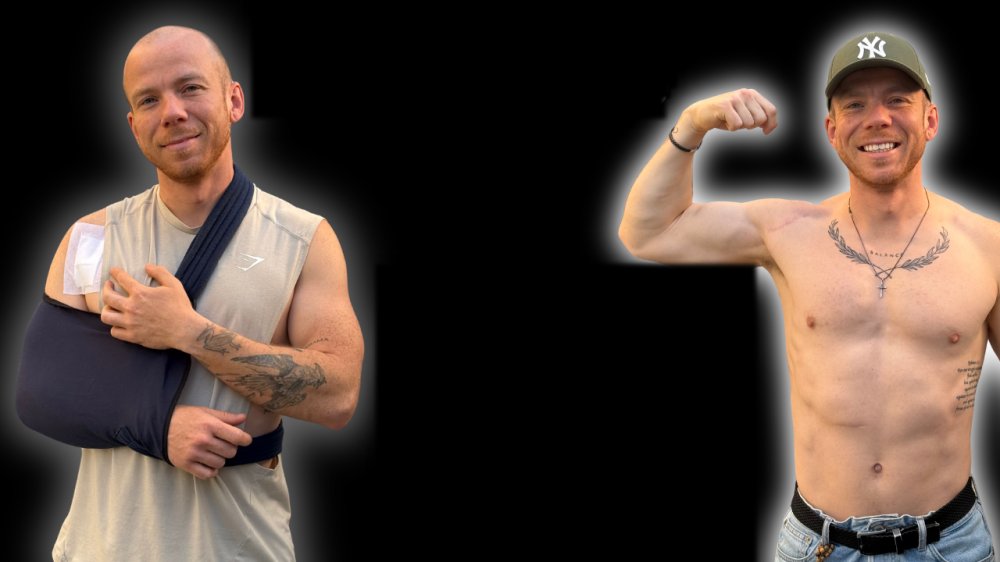
Part 1: prehab, the training before surgery
A lot of people with a Latarjet planned in a few months think: why train now, I'll lose the muscle anyway. I understand that thinking. But I believe prehab is one of the most valuable things you can do before surgery, and research on surgery in general supports it.
To be clear: prehab won't make your bone heal faster. Bone and soft tissue need the time they need. What prehab does is put you in a better position to get through that time.
What prehab gives you
- A muscle reserve. In the sling, most people lose muscle around the shoulder. This is called atrophy. The more muscle you start with, the faster you get it back. I lost a lot of muscle at the back of my shoulder, partly because of my nerve damage, and I was glad I'd trained beforehand.
- Energy. Good cardio fitness from walking, cycling, running or swimming helps you cope with the surgery and the weeks after.
- Possibly less pain. People who train regularly often seem to find the rehab exercises less painful. Compare yourself with yourself, not with others.
- Better stability once you start rebuilding.
Before my surgery I trained my shoulders and rotator cuff, did cardio and stretched. Within the limits your surgeon gives you, keep moving. It's one of the few things you fully control.
Prepare your mind too
The mental side can be as hard as the physical one. If your identity is tied to sport or a physical job, losing that for a while can shake you. Remember that the recovery is a few months to a year. Plan what you'll do with that time, and don't forget to go for walks. Walking is part of your rehab too.
Created with a shoulder physiotherapist, with video exercises for range of motion and strength.
Part 2: my first phase after surgery
My protocol was that I wore the sling at night and when I left the house. At home, I had to take it off. My hospital called this auto rehabilitation: using the arm gently in daily life would help it heal. That's their approach, and not every surgeon works this way.
Three simple tools helped me through the whole rehab:
- A stick. A broomstick, walking stick or yoga stick. Great for assisted exercises once you're allowed.
- A massage ball. I used it every day for months for stretching.
- A yoga mat if your floor is hard.
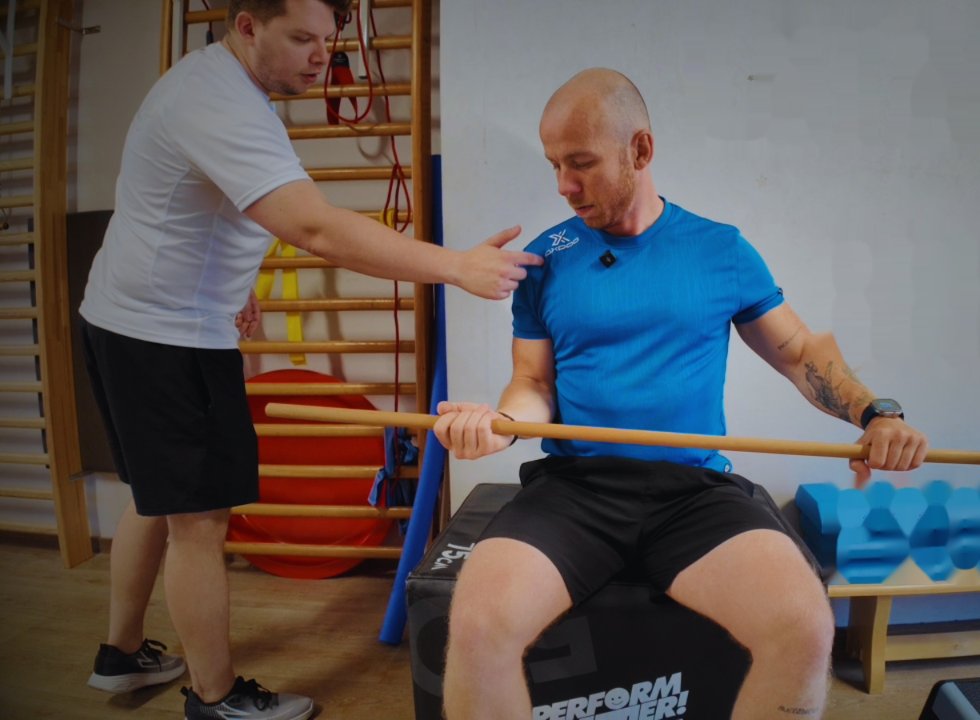
The five exercises
Phase one at a glance
| Exercise | Type | How | Watch out for |
|---|---|---|---|
| Crossed hands raise | Assisted | Sit, cross your hands at your belly button, slowly lift them towards chest height | Stay below pain. The operated elbow will lag behind. |
| Passive arm raise | Passive | Use your good hand to lift the operated arm straight up in front of you | Go to 90° or further only if your protocol allows it |
| Hand behind back | Passive | Gently push the operated arm backwards behind your body | A light push, never forced |
| Pendulums | Passive | Lean forward or kneel, let the arm hang loose and make small circles by moving your body | Don't use the shoulder muscles to swing |
| Wall walks | Assisted | Hand on the wall, walk your fingers up. Use your good arm to bring it back down. | The arm may drop if you let go, so support it |
1. Crossed hands raise
Sit on a chair, ball or sofa with the sling off. Cross your hands at your belly button and slowly raise them. The goal is chest height at first. Your operated elbow will stay lower and bent. That's fine. No rush, no pushing.
2. Passive arm raise
Use your good hand to lift the operated arm straight up. My surgeon wanted me at 180°, straight overhead, by two weeks. He was quite pushy about it because he wanted to make sure stiffness wouldn't block my range of motion later. It wasn't painful, I just felt tension and stiffness. Many protocols stop at 90° in this phase. Follow yours.
3. Hand behind your back
At first you won't be able to reach behind your back. Give the operated arm a gentle push backwards. Feel what it does and don't overdo it. That range comes back over time.
4. Pendulums
I think everyone should do these. They're non negotiable for me. Stand and lean forward, or kneel, whatever feels comfortable. Let the arm hang completely loose and make small circles by moving your body, not your shoulder. Three days after surgery I was doing them in the gym.
5. Wall walks
Put the hand of your operated arm against a wall and walk your fingers up. When I got high, I had to grab the arm with my other hand to bring it down, because it would drop if I let go. That may have been my nerve damage, so be careful and support the arm.
Why your arm feels strange at first
When I did my first pendulums, it felt like my arm was twisting. Not painful, just wrong. If you feel the same, it's normal. During a Latarjet, the surgeon moves a small piece of bone, the tip of the coracoid, to the front of your shoulder socket. Tendons stay attached to that piece of bone. So the whole mechanics of the shoulder change, and your body needs months to adapt.
What the Latarjet changes, simplified
The good news: the body is smart. At the beginning I didn't believe these movements would ever feel normal. At nine months I do pull ups, shoulder presses and bench press without pain. It takes patience and consistency, and it pays off.
One last thing
Comparison is the real killer in Latarjet rehab. Every body is different and every protocol is different. It's you versus you. And talk to your surgeon and physio. Communication makes a bigger difference than most people think.
Patients before and after surgery, sharing progress and answering questions.