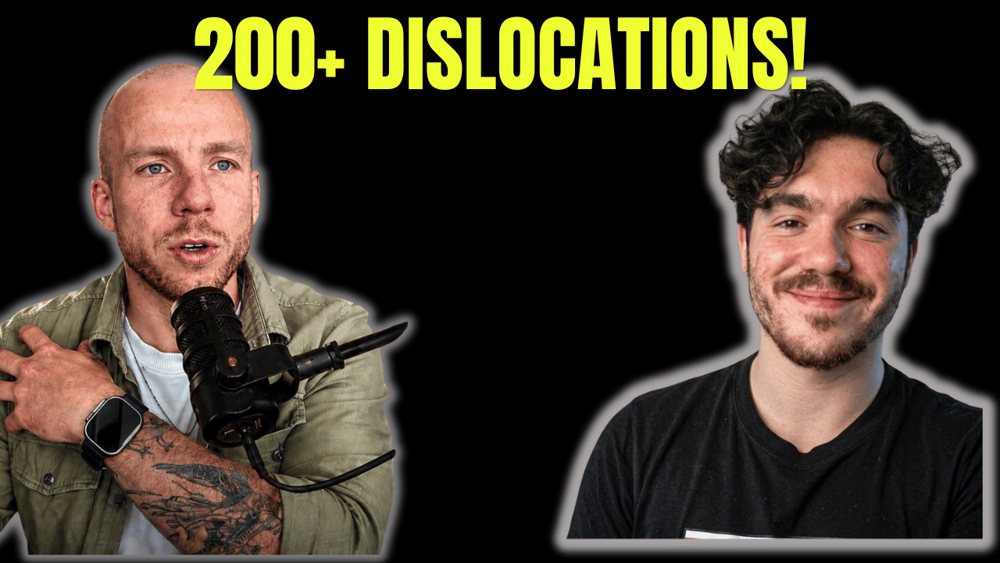
Louis is 25 and lives in South East London. He is a former semi pro goalkeeper and one of the most active members of our free WhatsApp group. When we sat down for the podcast, he summed up the last four years in one line: his hobby had been going to the hospital.
His case is not typical. Most people who need a Latarjet have a handful of dislocations before surgery. Louis had more than 200. But his story answers questions a lot of you ask me: when is a Latarjet the better choice than a labrum repair, what happens when surgery has to wait, and how does the shoulder feel once it's done.
How it started
In February 2022 Louis had an epileptic seizure. While he was unconscious, his mum tried to pull his hoodie off, and the shoulder came out. From that moment on it kept dislocating, at first every other month.
In July 2022 the shoulder dislocated again, this time during a physiotherapy exercise. He was on his knees, face down, doing simple raises. That dislocation also fractured his shoulder. After that, the dislocations came almost every week.
Louis's road to the Latarjet
- FEB 2022First dislocation during a seizure
- JUL 2022Dislocation during a physio exercise, with a fracture. Dislocations become weekly.
- 2023Surgeon: no surgery until the epilepsy is controlled. A neurologist is found.
- MID 2024Still having seizures, so surgery has to wait. Louis asks about the Latarjet and his surgeon agrees it's the best option.
- EARLY 2025Hospital two to three times a week, sometimes daily, to have the shoulder put back in under sedation
- 1 OCT 2025Last dislocation and last seizure before surgery
- 23 OCT 2025Latarjet surgery
- +2 WEEKSSurgeon moves his arm to 90/90 at the check up. Stable and pain free.
- ~10 MONTHSFull range of motion, back in the gym
Why a Latarjet and not a labrum repair
The first surgery his surgeon talked about was a Bankart repair, a repair of the labrum. That was the standard route in London at the time.
But Louis kept reading. He learned about the Latarjet and brought it up himself at one of his fracture clinic appointments. His surgeon agreed straight away. Louis had a Hill Sachs lesion and some bone loss, and in that situation the surgeon saw the Latarjet as the best solution. The Latarjet adds a block of bone to the front of the socket, which is why it's often chosen when bone is missing.
When surgery has to wait
This is the part of Louis's story most people will never go through, and it's also the hardest part. His surgeon told him he couldn't operate until his epilepsy was under control. A seizure after surgery could undo everything.
In England there is no dedicated epilepsy specialist once you turn 18, so finding one took time. His surgeon used his own network to get Louis a neurologist. With the right medication, his seizures dropped to just four in about three and a half years.
Meanwhile the shoulder got worse. In early 2025 he was going to hospital two to three times a week, sometimes every day for long stretches. Often he had to be sedated to get the shoulder back in. And because he could barely do physio, the muscles around the joint wasted away. Less muscle meant less stability, so the shoulder came out even more easily. A vicious circle.
I was thinking, is this ever really going to happen?Louis
He also admits he got stuck in a loop: reading about the surgery and watching live surgery videos every single day. His best friend eventually told him to stop, because it was making things worse, not better.
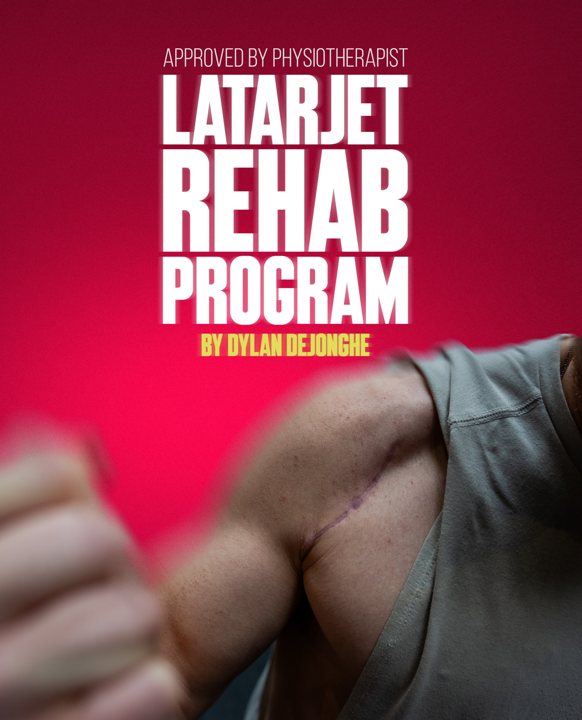
The Latarjet Rehab Program walks you through preparation, the sling weeks and the rebuild, with physio approved video exercises.
The first weeks after surgery
Louis had his Latarjet on 23 October 2025. His protocol was the standard one, with one twist: given his situation, his surgeon told him to take off the sling when he felt confident.
From day one he did small exercises:
- arm on the table, turning the hand over
- making a fist
- very, very light pendulums
At his two week check up he was still nervous and had stayed strictly in the sling. Then his surgeon took his arm and moved it to 90/90 and further. Louis expected pain. There wasn't any. What surprised him most was how stable it felt.
After that he saw his physio every four to six weeks and got new exercises each time. Like mine, his physio was aggressive in the beginning, and it took a while before he had a real breakthrough.
Before and after
Before surgery, Louis could lift his arm to about 30 degrees in front of him. He didn't even try to move it out to the side or rotate it outwards. Today he has full range of motion. There's still a little stiffness in the elbow, but he expects that to come back too.
Forward flexion, before and after
He's back in the gym lifting weights, something that feels almost alien to him after years of doing nothing with that arm. He's also working towards his football coaching badges, to stay close to the game he loves.
How the shoulder feels now
I asked him if he's afraid it will come out again. His answer is one I hear from a lot of Latarjet patients:
It just feels new. Like there's a belt around my arm.Louis
Some days he notices it, most days he doesn't. Sometimes it's a little sore. It doesn't feel like it's going to dislocate. He also knows he won't be as flexible as he was as a goalkeeper, flying through the air. The surgery humbles you, he says, but it doesn't stop you from getting back to sport or the gym.
Louis's advice if you're struggling
- Don't compare yourself. Not to him, not to me, not to anyone. Every recovery is its own journey, and it's hard for everybody.
- Find people who get it. Before, there was nothing for him. Now there's a group of people who have been through the same surgery.
- Setbacks are part of it. Three steps forward, five back, then ten forward. That's what perseverance looks like.
- It ends. The pain doesn't last forever, and coming out on the other side is sweet.
Louis is in our WhatsApp group. If you want to talk to him, or to anyone else who has been through a Latarjet, you're welcome to join. It's free.
Patients before and after surgery, sharing progress and answering questions.